Understanding the Glass Bottle Formation Process
From soft drinks to luxury perfumes, glass bottles have become an iconic packaging solution that combines functionality, sustainability, and aesthetics. But have you ever wondered how a simple mixture of sand and minerals transforms into a beautifully shaped glass bottle? The process is a fascinating blend of science, precision engineering, and craftsmanship.
In this article, we’ll explore each stage of the glass bottle formation process, from raw materials to the finished product ready for packaging.
1. Raw Materials: The Foundation of Glass
The journey of every glass bottle begins with its raw ingredients. The primary component is silica sand (SiO₂), which provides the basic structure of glass. To lower the melting point and improve the workability of the glass, other materials are added, such as:
- Soda ash (Na₂CO₃): Reduces melting temperature.
- Limestone (CaCO₃): Adds stability and durability.
- Cullet (recycled glass): Enhances melting efficiency and reduces energy consumption.
Using recycled glass not only lowers production costs but also significantly reduces environmental impact, making the process more sustainable.
2. Melting and Refining: Turning Sand into Liquid Glass
Once the raw materials are precisely weighed and mixed, the batch is fed into a furnace operating at temperatures around 1,500°C (2,700°F). Here, the ingredients melt and combine into a molten glass.
During this stage, refining agents help remove bubbles and impurities, ensuring a clear and homogeneous mixture. The molten glass is then cooled slightly to achieve the ideal viscosity for forming. Maintaining consistent temperature and composition at this stage is critical — even small variations can affect the quality of the final product.
3. Gob Formation: Precision in Every Drop
After refining, the molten glass flows to a forehearth, where it is evenly distributed and conditioned for bottle production. The glass is then cut into precise, measured portions known as “gobs.”
Each gob is a glowing, molten droplet that will form one glass bottle. The shape, size, and weight of the gob are carefully controlled to ensure uniformity and minimize waste. This precision step sets the foundation for consistency across every bottle produced.
4. Forming: Shaping the Bottle
Once the gobs are ready, they enter forming machines — highly sophisticated systems that shape the glass through a two-step molding process:
- Blank Molding (Preforming): The gob is dropped into a blank mold and partially shaped by compressed air, creating a preliminary form known as a parison (a hollow pre-bottle shape).
- Blow Molding (Final Forming): The parison is transferred into a final mold, where it is blown into its finished bottle shape under controlled air pressure.
This process, known as blow-and-blow or press-and-blow, allows manufacturers to produce bottles of varying shapes, thicknesses, and capacities. Automation ensures precision and high production speeds, often producing hundreds of bottles per minute.
5. Annealing: Strength Through Controlled Cooling
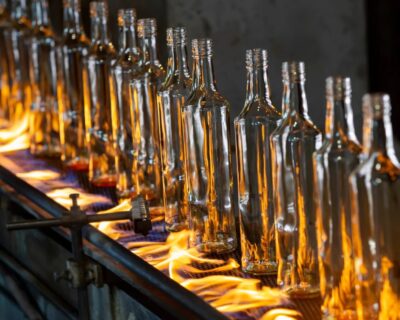
Freshly formed bottles are still extremely hot and fragile. They are gradually cooled in a temperature-controlled annealing lehr, a long tunnel oven that relieves internal stresses in the glass.
This controlled cooling process enhances the strength and durability of the bottles, preventing cracks or breakage during handling, filling, or transport.
6. Inspection and Packaging: Ensuring Quality and Perfection
Every glass bottle undergoes rigorous inspection and testing to ensure it meets quality and safety standards. Modern inspection systems use cameras and sensors to detect defects such as air bubbles, cracks, or uneven thickness.
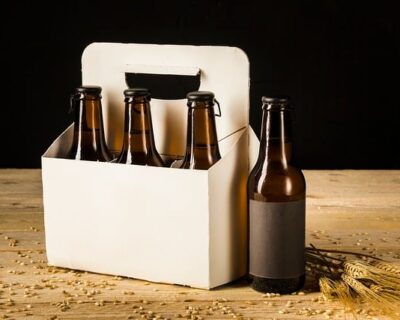
Once approved, bottles are washed, labeled (if required), and packed for delivery to beverage companies, pharmaceutical manufacturers, or cosmetic brands worldwide.
7. Sustainability in Glass Manufacturing
One of the greatest advantages of glass bottles is their infinite recyclability. Used bottles can be melted down and reformed into new ones without losing quality. By increasing the proportion of cullet in production, manufacturers reduce energy use, raw material consumption, and carbon emissions — making glass one of the most sustainable packaging materials available.
Check Also:-
Bottle manufacturers company
Glass bottle manufacturers India
Glass bottle manufacturers
Glass bottle manufacturers in India
Glass bottles suppliers
Glass bottle manufacturers in Ahmedabad
Glass bottle manufacturers in Gujarat
Final Thoughts
The formation of a glass bottle is a remarkable combination of chemistry, technology, and artistry. From melting raw minerals to shaping and refining the final product, each step is a testament to human innovation.